Iranian Foreign Minister Meets Pakistan's Top Military Commander
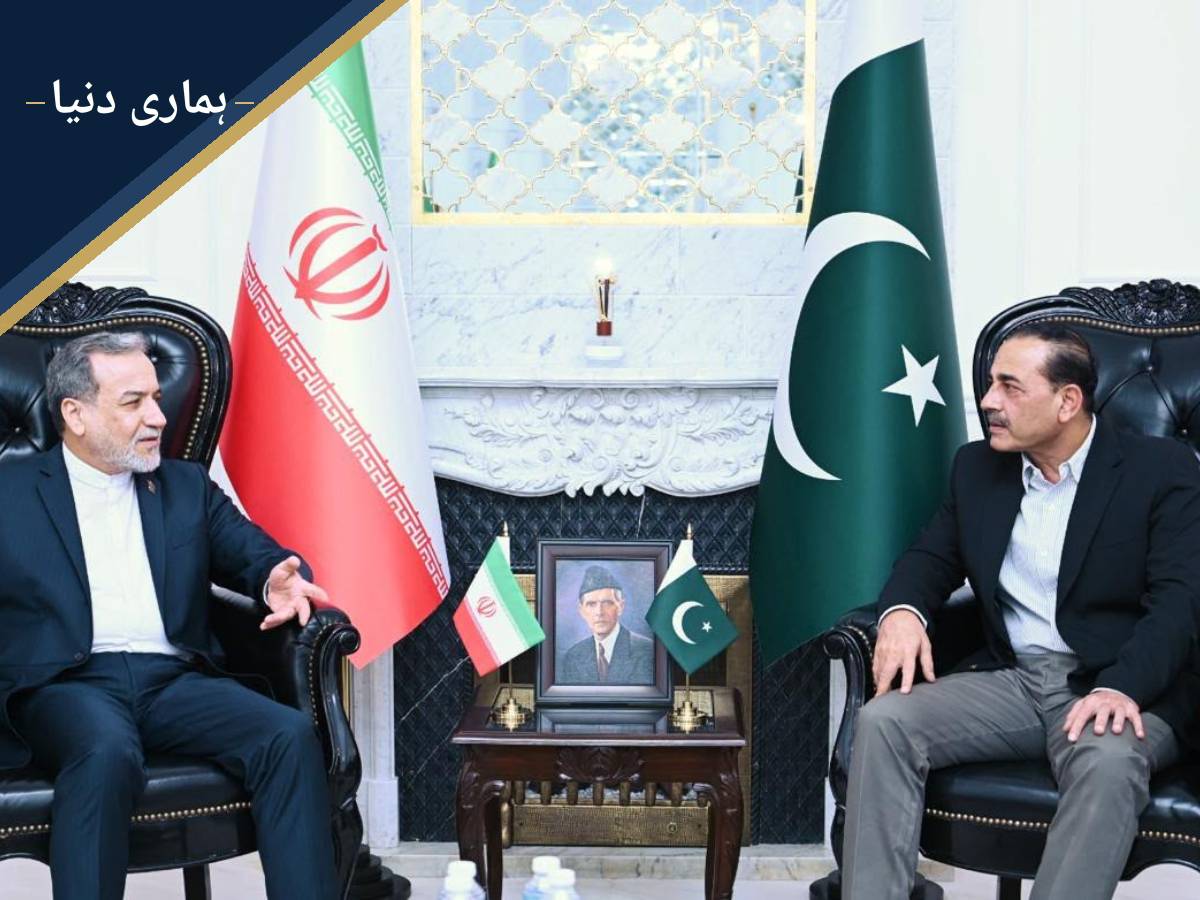
Iranian Foreign Minister Abbas Araghchi met Chief of Defence Forces Field Marshal Asim Munir in Islamabad on November 16. The meeting focused on regional security, evolving geopolitical developments, and bilateral cooperation between Iran and Pakistan.
Discussions on Security and Cooperation
According to a statement by the Inter-Services Public Relations (ISPR), both sides discussed matters of mutual interest and ways to address common security challenges. Field Marshal Munir highlighted the importance of sustained engagement, mutual trust, and close coordination between the two brotherly countries to promote regional peace and stability.
The Iranian foreign minister praised Pakistan's constructive role in promoting regional peace and stability and said Iran wants to further strengthen bilateral relations with Pakistan.
Araghchi's Visit for ECO Meeting
Araghchi arrived in Islamabad on November 15 to attend the 30th Economic Cooperation Organisation Council of Ministers Meeting. Additional Foreign Secretary Muhammad Tariq Wazir and other Ministry of Foreign Affairs officers received him at the airport.
During the ECO meeting, Araghchi met Deputy Prime Minister and Foreign Minister Ishaq Dar. The two sides reviewed Pakistan-Iran relations and discussed regional and international developments of mutual interest. They reaffirmed their close and brotherly ties and pledged to strengthen bilateral cooperation through continued high-level engagement.
Pakistan's Peace Efforts Between the US and Iran
Ishaq Dar said Pakistan has not given up on its efforts to promote peace between the United States and Iran. He said Islamabad is still waiting for a response from the United States to its proposal and remains hopeful of a breakthrough.
Araghchi accused the United States of aggression, threats, targeted assassinations, economic pressure, and a blockade in violation of international law and the UN Charter. He said Tehran seeks friendly and constructive relations with its neighbours and has no inherent dispute with countries in the region.
He added that the territory, airspace, and facilities of countries in the region must not become a platform for attacks against one another.
Background on Regional Conflict
On February 28, the United States and Israel launched a joint offensive against Iran. Tehran retaliated with strikes on Israel and other Gulf countries hosting US assets. Pakistan subsequently positioned itself as a key mediator for peace and hosted the highest-level US-Iran talks since the 1979 Islamic Revolution.
Although the Islamabad Talks ended without agreement, the ceasefire was held and later extended at Pakistan's request. Pakistan remains hopeful for the resumption of direct talks, but sources said there was no significant change in Iran's earlier stance on the nuclear issue in its response to US proposals.