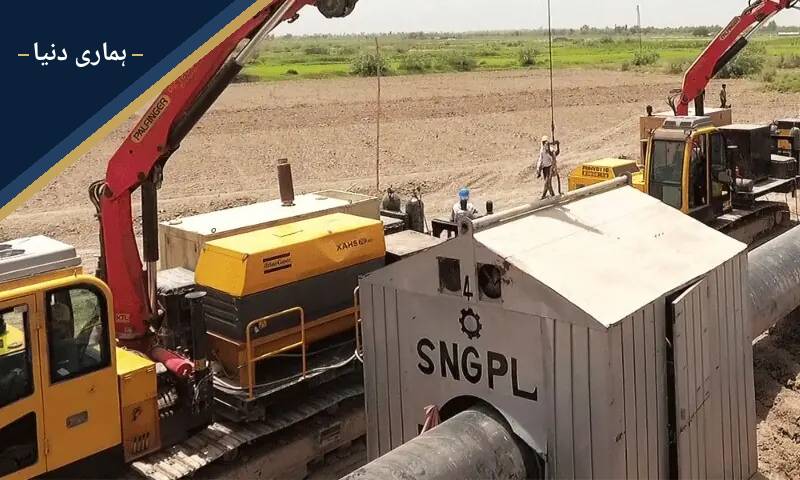
The government has finalised a plan to break up the two state-owned Sui gas companies into six to eight smaller entities, aiming to replace the current monopolies with a competitive gas market. A summary with the reform framework has been submitted to Prime Minister Shehbaz Sharif for in-principle approval.
What the plan proposes
The Petroleum Division, with technical support from the World Bank, KPMG and Wood Mackenzie, proposes separating transmission, distribution and sales businesses. The structure includes:
- Independent transmission and distribution companies
- Two competitive gas supply (CGS) entities for commercial and industrial consumers
- Two regulated gas supply (RGS) entities for domestic consumers
Implementation timeline
Transaction advisers will be engaged after the prime minister's authorisation. Officials target rolling out the transformation into the implementation stage by the fourth quarter of 2027. The plan requires constitutional, legal and regulatory steps over five to six months.
Circular debt and financing
More than Rs3 trillion in gas circular debt will be moved to a special purpose vehicle (SPV), modelled on the Power Holding Company Limited in the power sector. The SPV will be funded through a debt-servicing surcharge added to consumer tariffs.
Impact on gas prices
Financial projections based on FY2025 accounts show the transport and CGS segments would be profitable from the start, while the RGS segment serving households would run losses. Key price gaps:
- SNGPL domestic consumers pay Rs1,268 per MCF against a break-even of Rs2,152 — a 69.8% increase needed
- SSGCL domestic consumers pay Rs732 per MCF against a break-even of Rs1,337 — an 82.7% increase needed
- Commercial and industrial consumers pay Rs2,893 per MCF against a break-even of Rs2,737 — room for a 5.4% reduction
To address the domestic shortfall, the government plans to gradually raise gas prices, reduce domestic billing slabs from 12 to one, and provide direct subsidies to vulnerable consumers through the social safety net.
Market opening
Sui companies must free up 20% of their supply and consumer portfolios for CGS companies in the first year, followed by 10% in each of the next two years. Once 60% is offloaded, price regulation in the competitive segment ends.
Investment requirements
The plan estimates capital expenditure of Rs736 billion for SNGPL and Rs390 billion for SSGCL over six years (FY2027–2032). A multi-year tariff based on the regulatory asset base methodology, similar to K-Electric's model, is proposed to fund these investments.
IMF backing
The International Monetary Fund supports the reforms, with its clearance required under the ongoing programme and the gas circular debt management plan.