
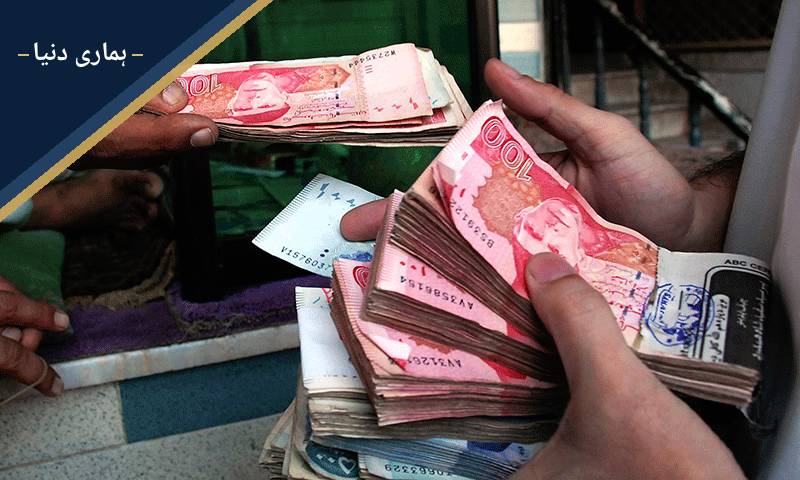
Profitable Companies Choose Dividends Over Growth
Pakistan's largest listed companies are not short of cash. They are short of reasons to invest it.
Data from the State Bank of Pakistan shows that non-financial corporations listed on the stock market earned Rs20.7 trillion in after-tax profits between 2005 and 2025. They paid out Rs10.7 trillion — more than half — as cash dividends to shareholders.
This was not a one-off. Firms paid out over 50% of profits in 15 of the last 21 years. In FY25 alone, dividend payouts reached Rs500 billion.
Sector Breakdown: Highest Payout Ratios
- Food: 63%
- Autos: 59%
- Other manufacturing: 59%
- Chemicals: 57%
The highest-return firms — the top 20% by return on assets — earned 83% of all private sector profits and still paid out 54%. Multinational subsidiaries sent 68% of their profits abroad as dividends.
Finance Is Not the Main Problem
Governments have long argued that low investment stems from limited access to finance. The State Bank governor previously said weak investment is "directly linked" to low savings. Policies have focused on attracting foreign capital, promoting Islamic finance, and lowering borrowing costs.
Yet the results remain poor:
- Foreign direct investment averaged under 1% of GDP (2006–2025); world average is 2.6%
- Total investment averaged 15.7% of GDP; lower-middle-income country average is 29.8%
- Only 8 of 168 countries invested less
- Private investment recently near 10% of GDP
The evidence suggests firms have internal funds but see few viable opportunities at home. High dividends are a symptom, not the cause.
Why Firms Hold Back: Uncertainty and Weak Institutions
Investment in plants and machinery takes years to pay off and is hard to reverse. Firms commit only when returns are predictable and contracts are enforceable. Pakistan scores poorly on both.
Macroeconomic Instability
The economy swings from boom to bust every few years. The current IMF programme is the 24th. Such volatility makes firms delay long-term spending.
Weak Rule of Law
The World Justice Project's 2025 Rule of Law Index ranks Pakistan 130th of 143 countries:
- Civil justice: 129th
- Regulatory enforcement: 127th
Complex production chains need trusted courts and reliable contract enforcement. Without them, firms avoid irreversible investments.
Policy Direction Worsens Predictability
Instead of strengthening uniform rules, the government has expanded discretionary powers. The Special Investment Facilitation Council (SIFC), created in 2023, can waive regulations for individual projects — replacing general rules with case-by-case deals. The government's own reform agenda warns this lack of transparency undermines policy predictability.
Judicial independence has also come under pressure. The International Commission of Jurists called the 26th constitutional amendment "a blow to judicial independence" and the 27th a "flagrant attack" that will "significantly impair the judiciary's ability to hold the executive accountable."
The Test Ahead
The measure of success is simple: whether Pakistan's most profitable firms start reinvesting their own earnings at home. Cheap credit schemes and investment conferences will not change behaviour until the environment offers stable returns and enforceable contracts.
Policy measures must focus on reducing uncertainty for firms by providing a stable macro environment, consistent enforcement of regulation, and the rule of law, which ensures trust in the judiciary.
Source: Analysis published in Dawn, The Business and Finance Weekly, November 23, 2026. The writer is an Associate Professor at the University of Bristol and a member of the independent Economic Advisory Group (EAG).