WASHINGTON: For years, the pro-Israel lobbying group AIPAC was a powerful force in US politics. But after last week's midterm elections, the group is on the defensive. Many voters are unhappy with US-Israeli ties, and candidates who openly criticize Israel have won.
For a long time, candidates from all parties wanted the support of the American Israel Public Affairs Committee. Now, that support has become a problem in many races. This is because opinions about Israel have fallen sharply, due to civilian deaths in Gaza and the costly war with Iran.
AIPAC loses ground in Michigan and Texas
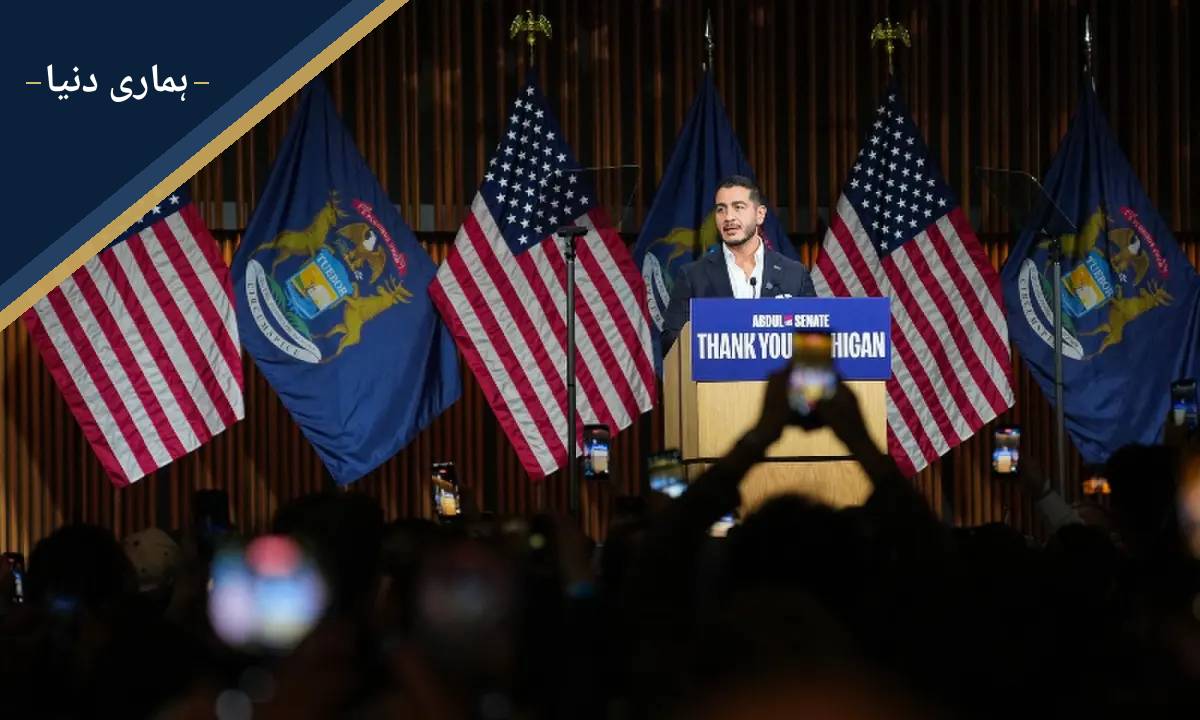
In the Michigan Senate race, AIPAC's strong influence met a tough opponent. Democrat Abdul El-Sayed, who spoke against US funding for Israel's military, faced AIPAC-supported candidates in both the primary and general election. He won and became the first Muslim senator.
An AIPAC-affiliated group called the United Democracy Project spent tens of millions of dollars. It failed to defeat El-Sayed. Instead, it helped him spread his own message. In his victory speech, El-Sayed said: "To AIPAC… Thank you for giving me the opportunity to beat you twice."
The situation changed so much that allies of El-Sayed's Republican opponent, Mike Rogers, reportedly asked the group to stop spending on him. Adam Wood, a veteran Democratic campaign strategist with City & State Public Affairs, said: "They definitely have become a liability." He noted that campaigns in the past wanted AIPAC's support.
Another Democrat, James Talarico, won in Texas with a similar message. He called for ending US funding for Israeli offensive weapons and staying away from AIPAC. Early in his campaign, Talarico said: "I've never taken money from AIPAC, and I'm not taking money from AIPAC in this campaign."
Israel support plummets
Officially, AIPAC does not support one party over another. It has backed candidates from both the left and the right. Its website says it only takes money from Americans, and its board is made up only of Americans. But in US politics, the group is now seen as a symbol of Washington's close ties with Israeli governments, including the outgoing far-right coalition of Benjamin Netanyahu.
The Chicago Council on Global Affairs has asked Americans to rate Israel from 0 to 100 since 1978. This year, the average score hit a record low of 44. It was 58 in 2022, during the last midterms. For Democrats, the drop is sharper: from 52 in 2022 to just 30 now.
Dina Smeltz, a former State Department official and now a managing director at the council, said: "Democrats started to really tank on Israel."
Representative Alexandria Ocasio-Cortez, a left-wing Democratic leader, has called AIPAC "a right-wing organization that undermines democracy." Support for the group also appears to be weakening on the right.
On election day, President Donald Trump called into Fox & Friends and announced that the US would end a major annual aid package to Israel. This is something El-Sayed and others on the left have demanded for a long time.
Vice President JD Vance said a trusted pollster told him his party needs to change "our relationship to Israel" to recover after the midterm losses. Other right-wing voices, including broadcaster Tucker Carlson and Representative Thomas Massie, have openly criticized Israel in recent years. This would have been hard to imagine in the 2000s and 2010s.
What comes next for AIPAC
Pro-Israel lobbyists are not disappearing. AIPAC faces competition from J Street, a left-leaning pro-Israel group, and from the recently formed pro-Palestine American Priorities super PAC.
The results of elections in Israel, including the possible political decline of Benjamin Netanyahu, could help AIPAC recover. Smeltz said: "It has been around for a long time, it has a lot of money."
Published in Dawn, November 12th, 2026.