
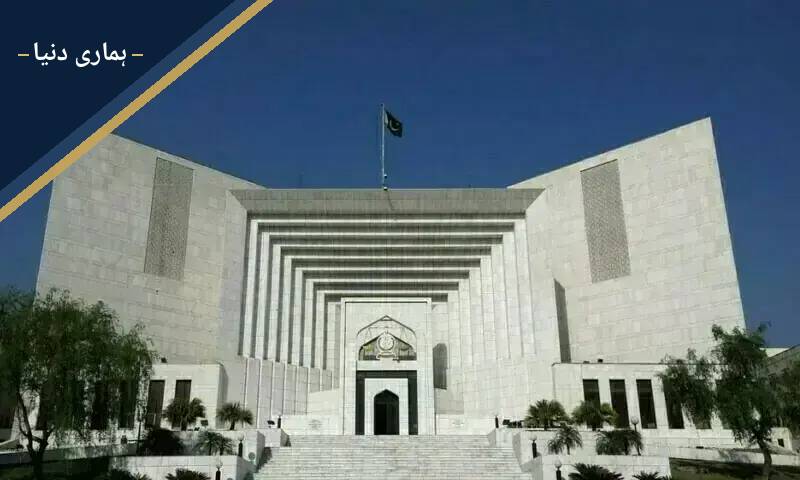
Supreme Court Acquits Two Brothers in Blasphemy Case
The Supreme Court of Pakistan has acquitted two brothers in a blasphemy case under Section 295-C of the Pakistan Penal Code. The court set aside their death sentences, which had earlier been upheld by the Lahore High Court.
Case Details and Background
A three-judge bench of the Supreme Court heard the case. The bench was headed by Chief Justice of Pakistan Yahya Afridi. Justices Shakeel Ahmad and Ishtiaq Ibrahim were also on the bench. The main judgement was authored by Justice Ishtiaq Ibrahim. Justice Shakeel Ahmad concurred with the order but also annexed an additional note.
The brothers, Liaqat Ali and Umar Draz, have spent around 20 years in prison. A sessions judge in Jhang convicted them on March 27, 2006. The trial court sentenced both brothers to death and fined them Rs500,000 each. It also ordered five years of rigorous imprisonment if the fine was not paid.
The Lahore High Court dismissed their appeals on September 17, 2015, and upheld the convictions.
What Led to the Case
According to the complaint, Umar Draz made blasphemous statements. This led to a marital dispute with his wife. They divorced on March 13, 2006. In the divorce papers, Draz stated in writing that he had converted from Islam.
When his former wife's dowry articles were returned, a written document by Liaqat Ali was found. It also contained blasphemous statements.
On March 18, 2006, the complainant and witnesses confronted the brothers about the alleged blasphemous material. Both brothers acknowledged the documents and said they were ready to repeat their statements before any forum.
Mental Health and Medical Reports
Before the Supreme Court, their lawyer argued that the brothers were mentally unsound. He said they did not have a guilty mind at the time of the alleged offence.
The Supreme Court examined three psychiatric assessments:
- A three-member medical board at DHQ Hospital, Faisalabad, found both men mentally sound in 2007.
- An eight-member Board of Certification diagnosed them with bipolar affective disorder with psychotic symptoms in 2023.
- A nine-member Board of Certification in September 2025 said both brothers had bipolar disorder, current episode manic. It said they had absent insight and could not understand their acts at the time. It described the illness as chronic and likely permanent in severe cases.
The court said the opinions of specialised boards with senior professors of psychiatry carried more weight than the earlier assessment by a board with only one psychiatrist.
The court also noted that bipolar disorder is episodic and has a genetic component. Both brothers were independently diagnosed with the same condition.
Court's Decision
The appellants have spent around 20 years behind bars. In the light of the opinion of medical board which raises doubts regarding the culpability of the appellants, the benefit of doubt cannot be withheld from the appellants.
The Supreme Court acquitted the brothers. It also directed the executive director of the Punjab Institute of Mental Health, Lahore, to ensure that their medical treatment was not discontinued.
Additional Note by Justice Shakeel Ahmad
Justice Shakeel Ahmad agreed with the acquittal but added a separate note. He said a psychiatric diagnosis alone does not meet the requirements of Section 84 of the Pakistan Penal Code.
He explained the difference between medical insanity and legal insanity. The key question was whether the accused, at the time of the offence, could not understand the nature of the act or did not know it was wrong or against the law.
Justice Ahmad said legal accountability must be balanced with humanity. True justice includes mercy when the law recognises that a person lacks mental capacity.
The note said the medical reports and surrounding circumstances created reasonable doubt. It also referred to Islamic principles of legal capacity and responsibility.
Published in Dawn, November 8th, 2026
Source: dawn