
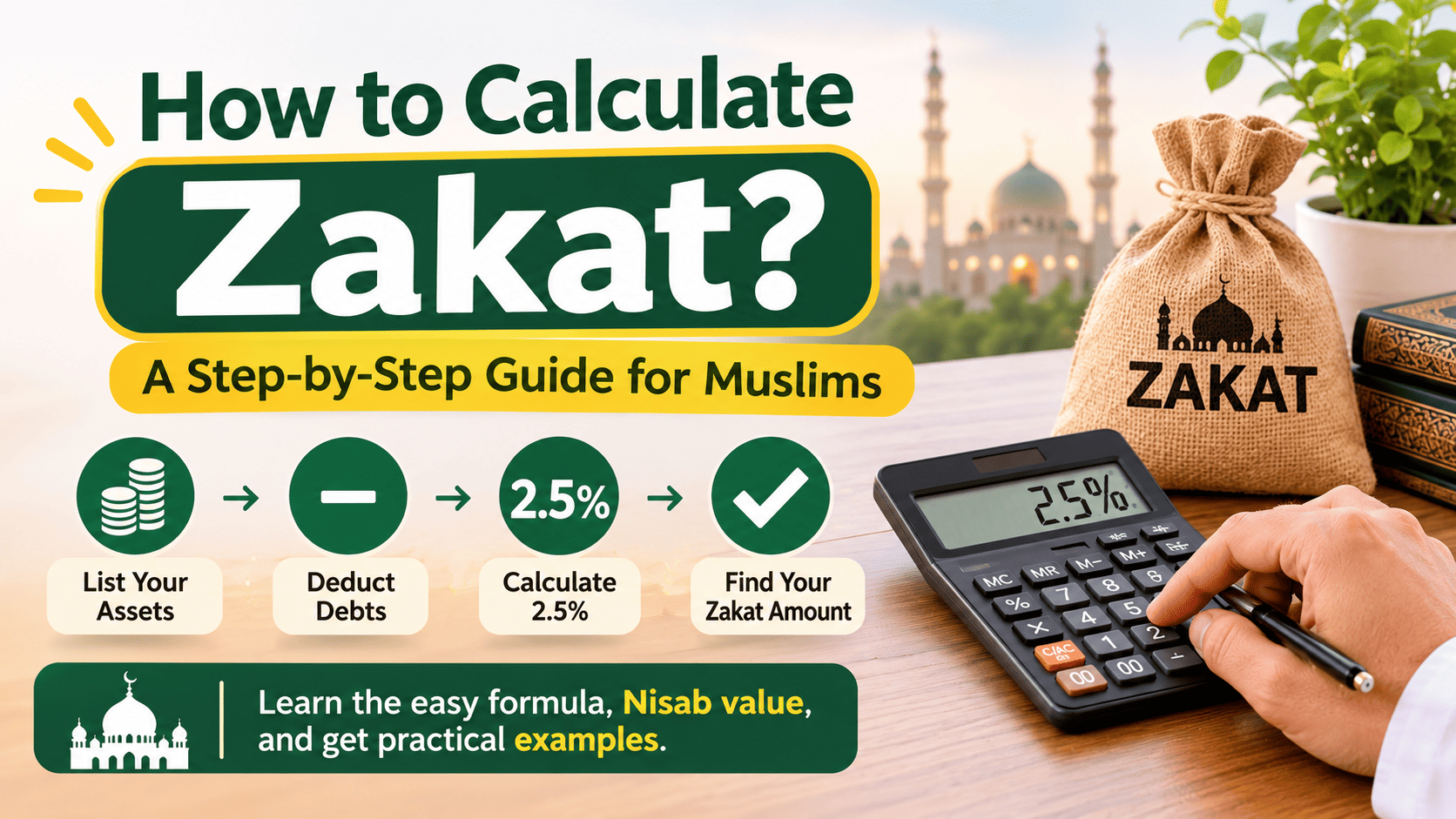
How to Calculate Zakat? A Step-by-Step Guide for Muslims
Calculating Zakat is an important responsibility for Muslims who have wealth above the required Nisab level. Zakat helps purify wealth and provides support to people who are facing financial difficulties.
Many people find Zakat calculation confusing because they may have different types of assets, such as savings, gold, business assets, or investments. However, calculating Zakat becomes easier when you understand which assets to include, which debts to deduct, and how the final amount is calculated.
This guide explains how to calculate Zakat step by step in a simple way.
What Is the Formula for Calculating Zakat?
The basic formula for Zakat calculation is:
Total Zakatable Assets - Eligible Debts = Net Zakatable Wealth
Net Zakatable Wealth × 2.5% = Zakat Amount
To calculate your Zakat:
- Add all assets that are eligible for Zakat.
- Deduct eligible debts and liabilities.
- Calculate 2.5% of the remaining amount.
Step 1: Check If You Are Eligible to Pay Zakat
Before calculating Zakat, you should check whether your wealth has reached the Nisab level.
Nisab is the minimum amount of wealth a Muslim must own before Zakat becomes obligatory.
Nisab is based on:
- Gold: 87.48 grams
- Silver: 612.36 grams
Since gold and silver prices change regularly, the Nisab value also changes. It is important to check the current market rates before calculating your Zakat.
Step 2: Add Your Zakatable Assets
The next step is to calculate the total value of assets that require Zakat.
Cash and Savings
Include all available money, such as:
- Bank account balance
- Cash kept at home
- Foreign currency savings
For Pakistan, this may include:
- Pakistani Rupees (PKR)
- US Dollars (USD)
- Saudi Riyals (SAR)
- UAE Dirhams (AED)
Gold and Silver
Gold and silver are common assets included in Zakat calculation.
Include:
- Gold jewellery
- Gold coins
- Gold bars
- Silver items
To calculate the value:
Gold Weight × Current Gold Price = Total Gold Value
Example:
If you own 20 grams of gold and the current gold price is Rs. 30,000 per gram:
20 × 30,000 = Rs. 600,000
Your gold value is Rs. 600,000.
Business Assets
If you own a business, include assets that are available for sale or can be converted into cash.
These may include:
- Business inventory
- Business cash
- Money customers owe you
Business property, equipment, and tools used for work are generally not included.
Investments
Depending on the type of investment, Zakat may apply to:
- Stocks
- Mutual funds
- Savings certificates
- Other investment assets
Step 3: Deduct Eligible Debts
After adding your assets, subtract eligible debts and financial obligations.
Examples may include:
- Short-term loans
- Due bills
- Immediate financial responsibilities
The calculation becomes:
Total Assets - Eligible Debts = Net Zakatable Wealth
Step 4: Calculate 2.5% Zakat
After finding your net zakatable wealth, calculate 2.5% of that amount.
Example:
A person owns:
| Asset | Amount |
|---|---|
| Cash Savings | Rs. 500,000 |
| Gold Value | Rs. 300,000 |
| Business Assets | Rs. 200,000 |
| Total Assets | Rs. 1,000,000 |
Eligible debts:
Rs. 100,000
Net zakatable wealth:
Rs. 1,000,000 - Rs. 100,000
= Rs. 900,000
Zakat calculation:
Rs. 900,000 × 2.5%
= Rs. 22,500
The payable Zakat amount is Rs. 22,500.
How to Calculate Zakat on Gold?
Gold Zakat is calculated according to the current market value of your gold.
Formula:
Gold Weight × Current Gold Rate = Gold Value
Then:
Gold Value × 2.5% = Zakat Amount
Example:
Gold weight: 10 grams
Gold price: Rs. 30,000 per gram
Gold value:
10 × 30,000 = Rs. 300,000
Zakat:
300,000 × 2.5%
= Rs. 7,500
How to Calculate Zakat on Savings?
To calculate Zakat on savings, add all your available money.
Example:
- Bank savings: Rs. 400,000
- Cash at home: Rs. 100,000
Total savings:
Rs. 500,000
Zakat:
500,000 × 2.5%
= Rs. 12,500
How to Calculate Zakat on Business?
Business owners should calculate Zakat on assets that are part of their trading activity.
Include:
- Products for sale
- Business cash
- Payments expected from customers
Do not include:
- Office equipment
- Machinery
- Property used for business operations
The calculation should be based on the current value of zakatable business assets.
Which Assets Do Not Require Zakat?
Generally, Zakat is not required on personal-use items, including:
- Personal home
- Personal car
- Clothes
- Furniture
- Household items
- Personal electronics
However, assets purchased for investment or business purposes may have different rules.
When Should You Calculate Zakat?
Zakat becomes due when:
- Your wealth reaches the Nisab level.
- You own that wealth for one complete Islamic year (Hawl).
Many Muslims calculate their Zakat during Ramadan because it is easier to remember and a blessed month for worship. However, Zakat should be calculated according to your own Zakat due date.
Common Mistakes While Calculating Zakat
Some common mistakes include:
- Forgetting savings in different accounts
- Not including gold or silver
- Using outdated gold prices
- Ignoring foreign currency savings
- Forgetting business assets
- Not deducting eligible debts
Keeping a yearly record of your assets makes Zakat calculation easier and more accurate.
Can You Use a Zakat Calculator?
Yes, a Zakat Calculator can make the calculation process easier. It helps you add different assets, deduct liabilities, and estimate your total Zakat amount.
A useful Zakat Calculator should include:
- Cash and savings
- Gold and silver
- Business assets
- Investments
- Debts
- Current Nisab value
Using a calculator saves time and reduces mistakes while calculating your yearly Zakat.
Frequently Asked Questions About Zakat Calculation
Is Zakat always 2.5%?
For most types of wealth, the standard Zakat rate is 2.5%.
Do I pay Zakat on my house and car?
No, personal-use houses and cars generally do not require Zakat.
Should I include foreign currency in Zakat?
Yes, foreign currency savings should be converted into your local currency value and included in your calculation.
Can I calculate Zakat online?
Yes, an online Zakat Calculator can help estimate your Zakat amount based on your assets and current Nisab value.
Can Zakat be paid before Ramadan?
Yes, Zakat can be paid before Ramadan if it is calculated correctly and the amount due is known.
Conclusion
Calculating Zakat is simple when you follow the correct steps. Add your zakatable assets, check the Nisab value, subtract eligible debts, and calculate 2.5% of your remaining wealth.
Zakat is more than a financial obligation; it is a way to support people in need and share the blessings Allah has given.
Use our Zakat Calculator to estimate your Zakat based on your savings, gold, business assets, and other wealth.
Disclaimer: Zakat rules can vary according to different Islamic schools of thought and individual situations. For complex cases, it is recommended to consult a qualified Islamic scholar.